
CNI Labs User Highlight: Amber Huang, Chemistry PhD Student
We're excited to launch the CNI Shared Labs User Highlight series, where we showcase the people behind the innovative research taking place in our facilities. Through conversations with graduate students, postdoctoral researchers, faculty, startup founders, and industry users, we'll provide a behind-the-scenes look at the diverse science and engineering enabled at CNI. In our first feature, we sit down with Amber Huang, a third-year Ph.D. student in Columbia University's Department of Chemistry.
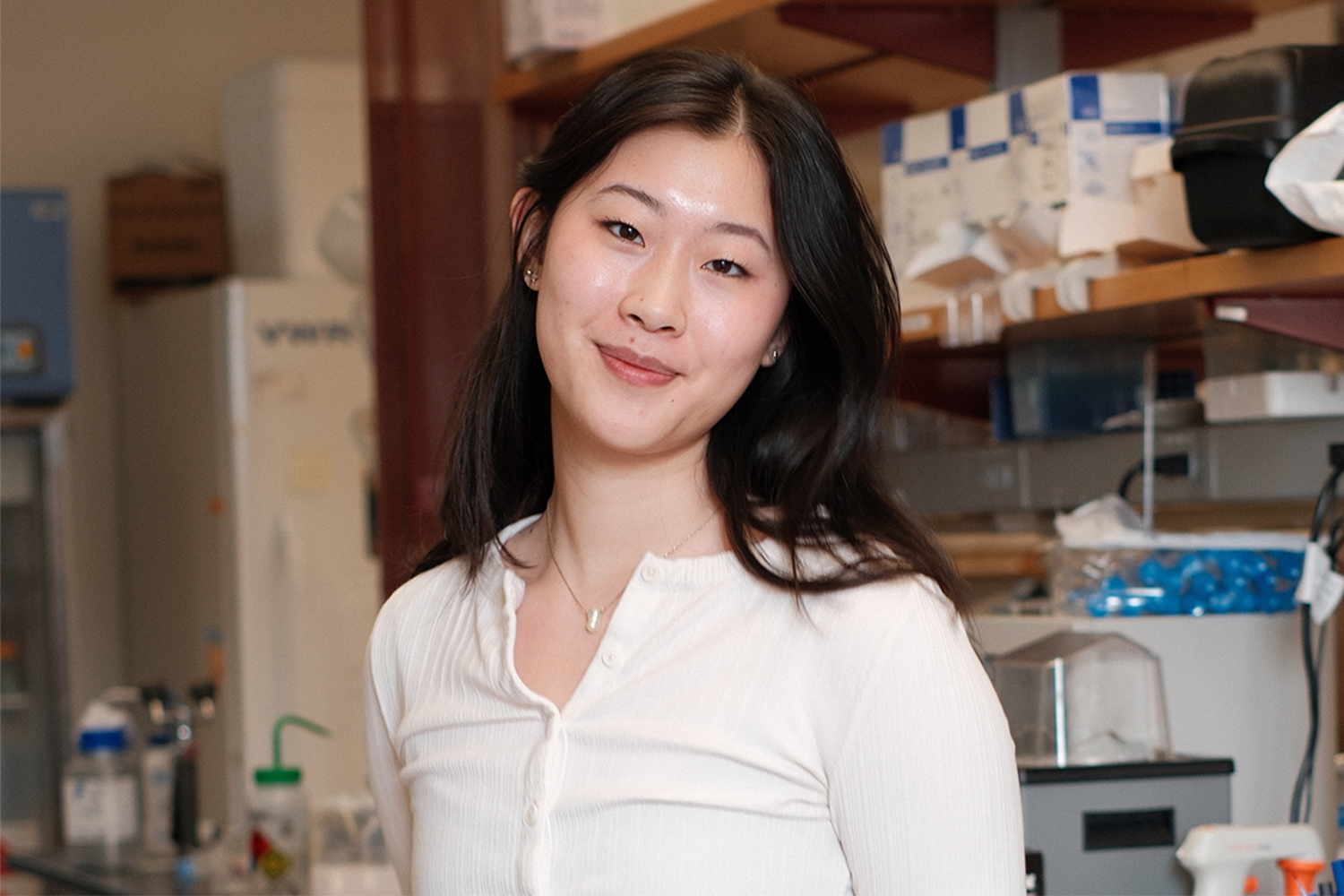
Amber Huang, Chemistry Ph.D. candidate at Columbia University.
Tell us a little bit about yourself.
I’m from the suburbs of Pittsburgh, PA. I did my undergraduate work at Vassar College, a small liberal arts college in the Hudson Valley. I majored in biochemistry and minored in statistics. At Vassar, I worked with Colin Echeverría Aitken studying translation initiation, the process of assembling the cellular machinery required to synthesize proteins. I initially wanted to pursue a career in medicine, but my experience in research as an undergraduate drove me to pursue a PhD.
Which research group are you a member of, and what is the group's overall focus?
I’m in Ruben Gonzalez lab. We use single-molecule biophysical methods to study complex biological processes including translation, RNA folding, and transport across the cellular membrane. Single-molecule techniques allow us to characterize different conformational states, their thermodynamic stabilities, and the kinetic pathways taken to switch between these states – all of which would be lost in ensemble studies due to bulk averaging.
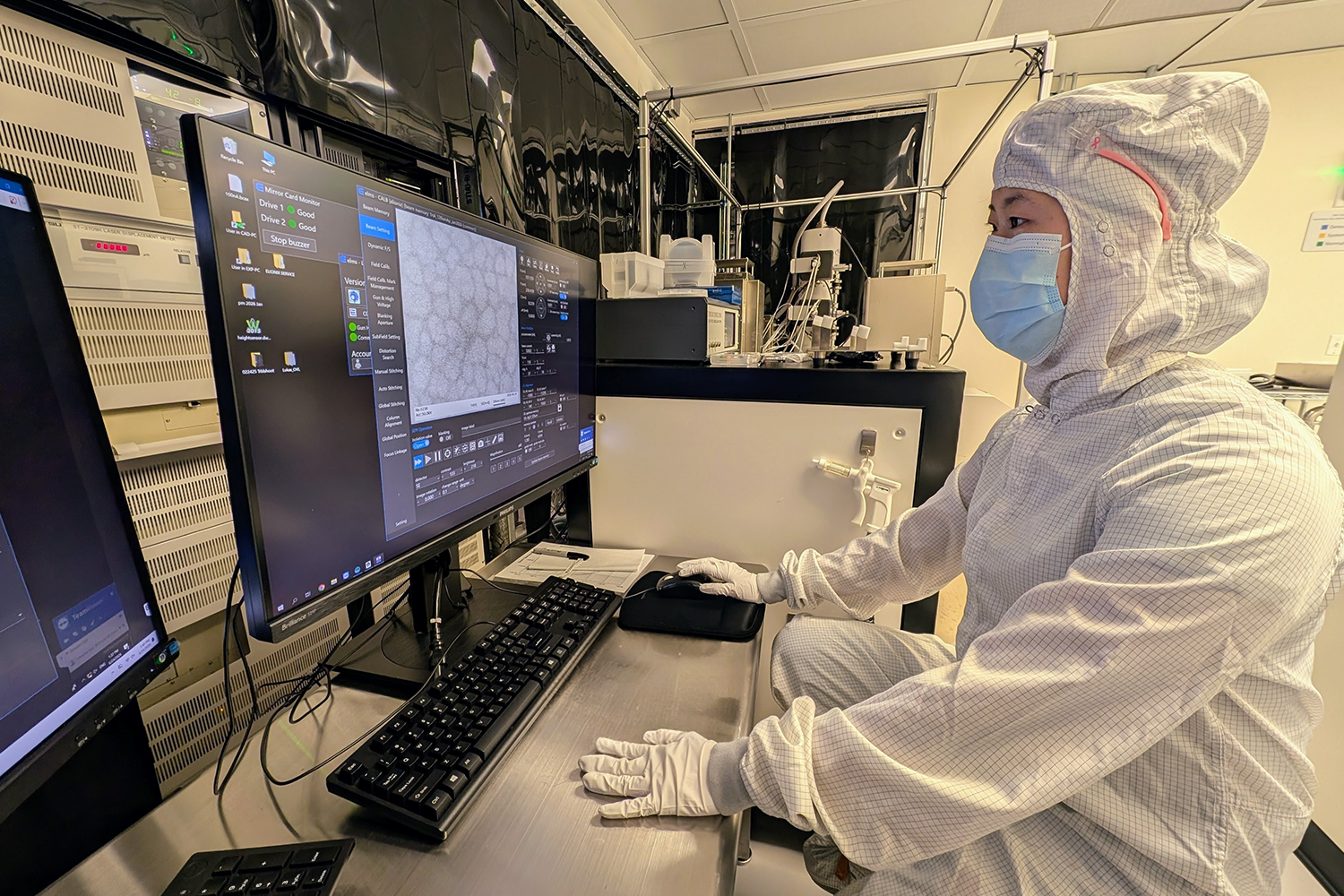
Amber utilizing the Elionix Boden 50f electron beam lithography system in the CNI Nanofabrication Cleanroom to write her nanostructures.
How would you describe your research to someone outside your field?
I’m studying the dynamics of RNA folding with single-molecule carbon nanotube-based field effect transistor (smFET) devices. My project is a collaboration between our lab and the Nuckolls and Shepard labs at Columbia. RNA molecules have so many roles inside the cell, from encoding the information for protein synthesis to structural, catalytic, and regulatory functions. They have to take on precise 3D structures to do all this, and their structures can also fluctuate between multiple conformations. These fluctuations can be important to the functions of RNAs as well. I’m currently using smFET devices to study the GNRA tetraloop, which is a highly conserved and unusually stable RNA motif. These devices let us take measurements at a much faster rate than many conventional single-molecule biophysical techniques, so I’ll be able to characterize the dynamics of the tetraloop and describe the mechanism of its thermodynamic stability.
Can you tell us about some potential future applications of your work?
Single-molecule biophysical measurements with smFET devices are still very new, so there’s still a lot of learn about how much information we can extract from these measurements. The GNRA tetraloop is pretty well-studied, so it’s a good benchmark for these thermodynamic and kinetic studies. My work will provide the groundwork to add smFET devices as another technique into the biophysical toolbox to study the effects of chemical modifications on RNAs and even more complex RNA motifs.
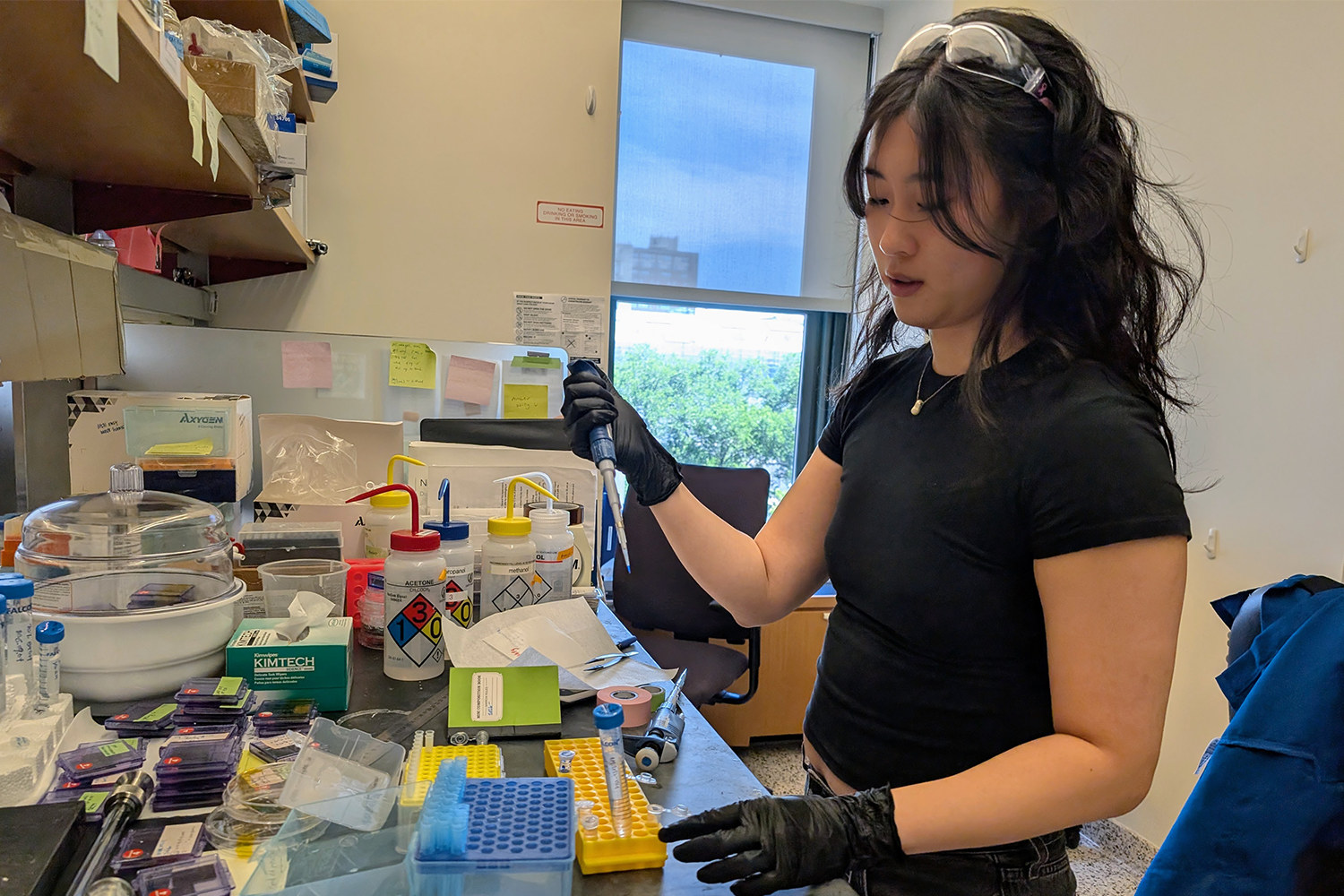
Working at the her bench in the Gonzalez Lab in Havemeyer Hall.
How did you decide to specialize in this area?
I was interested in studying the molecular mechanisms of essential biological processes and also generally interested in RNA. Since I worked on translation during my undergrad, I wanted to work on something different during grad school. I chose this project because I thought that it would both be a chance to develop something novel to the field and also learn new skills for myself. All of my undergraduate training was in biochemistry, so the thought of working in a cleanroom never once passed my mind. This project has really given me the opportunity to get out of my comfort zone scientifically, and I’m very grateful for that.
Where do you hope your career will take you in the next five to ten years?
I think that in the next five years, I’d like to be in a position where I’m still at the bench asking questions and doing research. I’m looking to work in industry, and I’m still learning about the variety of roles that “industry” can mean. I would love to remain in a field related to my current work, but I’m also open to something new!
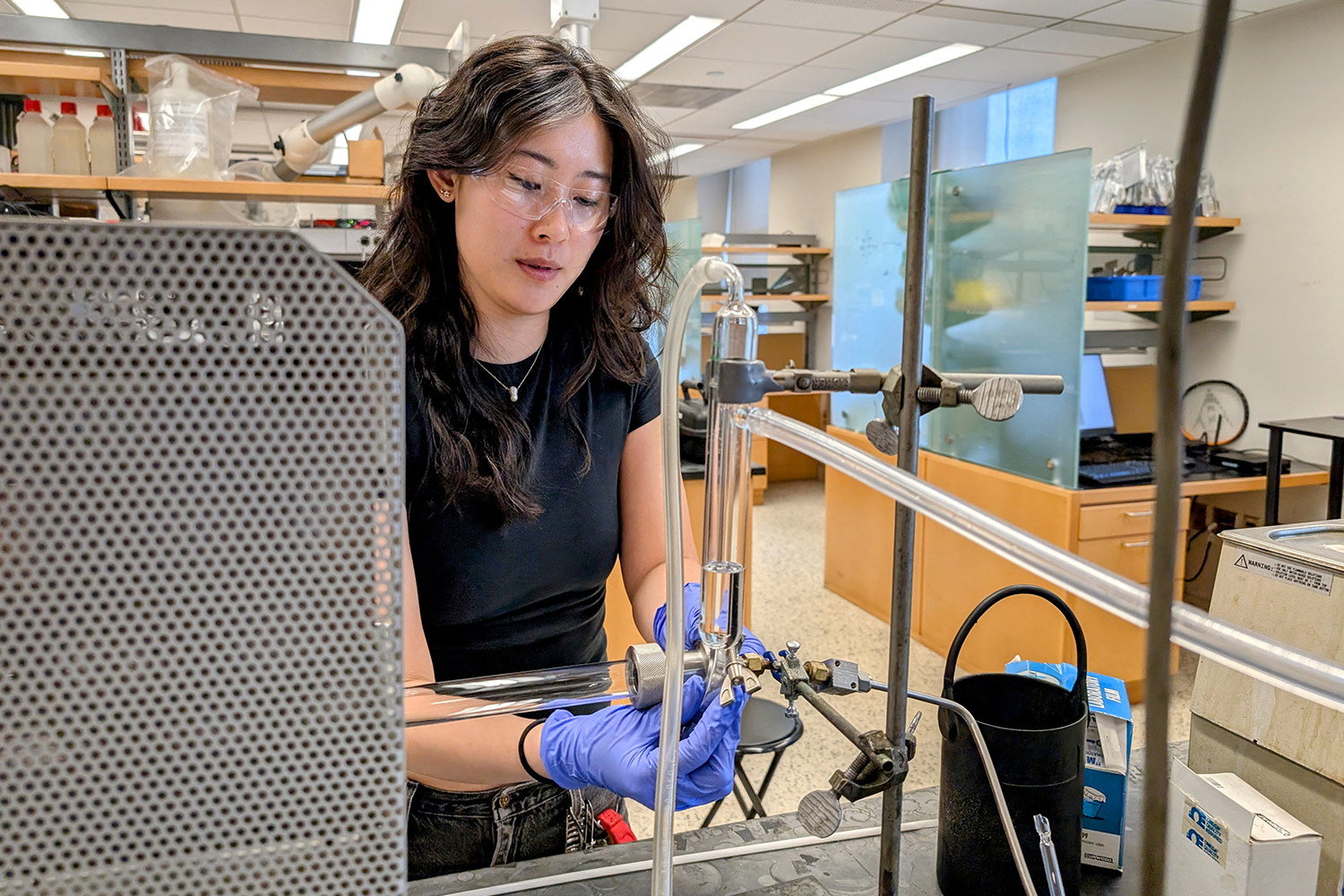
Setting up a chemical vapor deposition (CVD) system to grow carbon nanotubes in the Nuckolls Lab.
What do you enjoy doing for fun outside of your graduate program?
When I’m not in the lab, I try to stay active. I enjoy going to the gym, and I’ve been hiking a lot in the Hudson Valley, since a lot of the trails there are accessible by train. I also recently hiked the Inca Trail in Peru to Machu Picchu (my first time hiking at elevation!).
If you could go back to the first day of your graduate studies and tell yourself one thing, what would it be?
To be brave and just try new things. There are going to be so many things that you don’t know, but they become much simpler once you just take the first step to learn them. Also to have things outside of the lab to be excited about and look forward to!
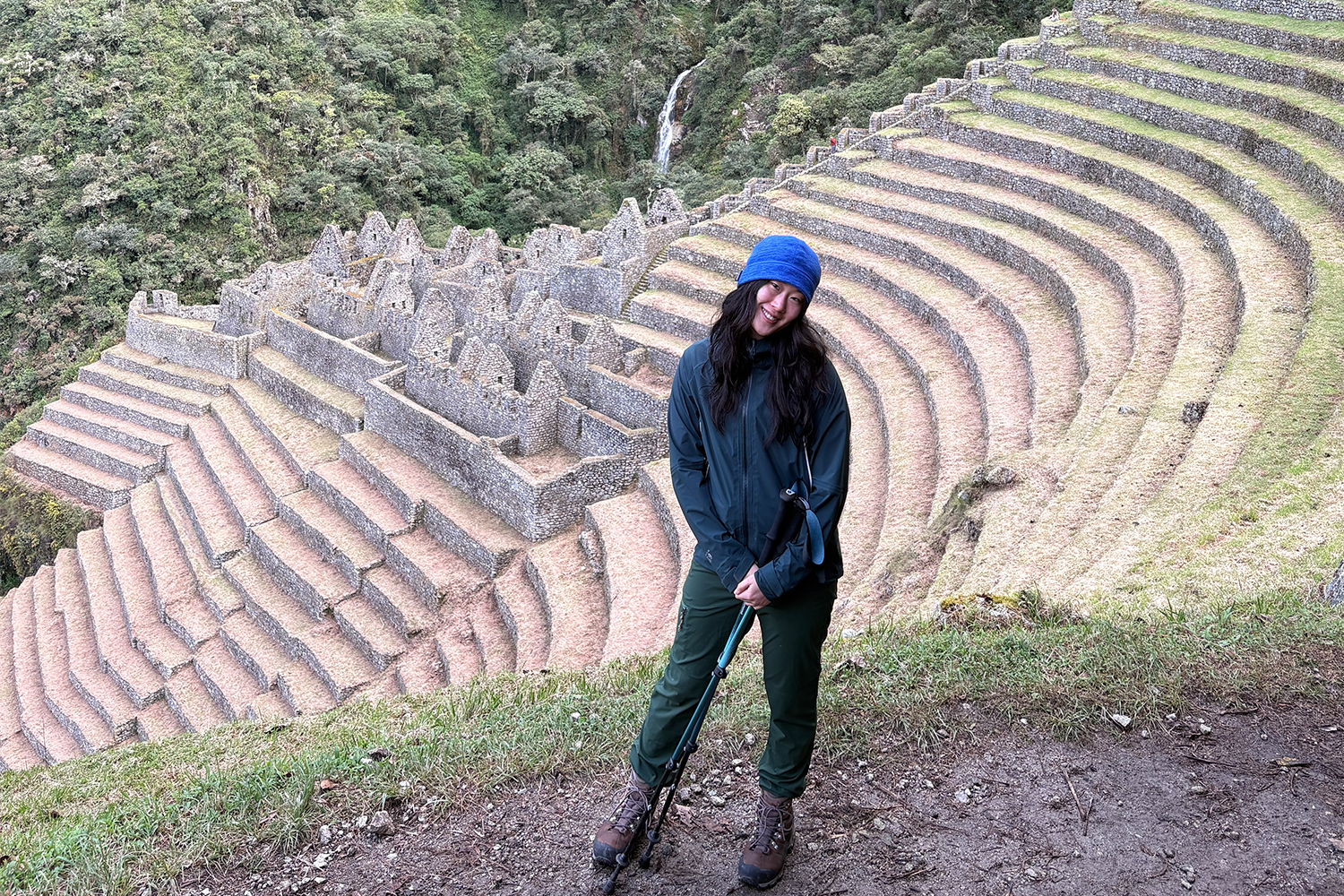
A snapshot from Amber’s recent hike along the Inca Trail in Peru, showing the ancient ruins of the Wiñay Wayna.
LinkedIn: https://www.linkedin.com/in/amber-huang-3178a2150/
The Gonzalez Laboratory: https://www.columbia.edu/cu/chemistry/groups/gonzalez/